
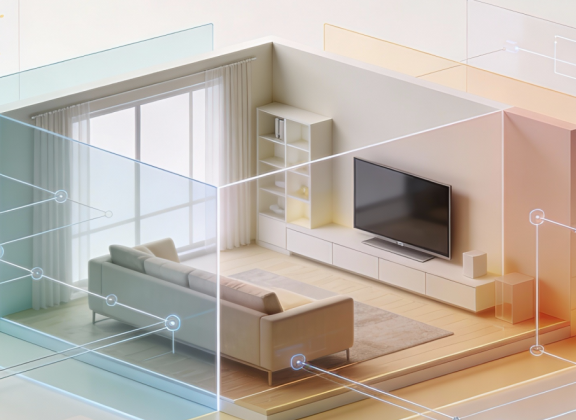
The home network has evolved far beyond basic internet access. Today, it supports entertainment systems that stream live television, on-demand video, and high-resolution content around the clock. IPTV set-top boxes and media players have become permanent network residents, constantly exchanging data with external services. While this connectivity enables convenience and rich functionality, it also introduces new challenges related to security, performance, and traffic predictability. VLAN technology offers a structured and efficient way to address these challenges without overcomplicating the home setup.
Entertainment Devices as a Dedicated Network Segment
Unlike computers or smartphones, IPTV devices are rarely managed by the user at the operating system level. They run vendor-specific firmware, install applications automatically, and often maintain persistent connections to content delivery platforms. When these devices operate inside the same network as personal or work-related equipment, the entire home environment inherits their limitations.
By placing media players into a dedicated VLAN, the network gains clear logical boundaries. This segmentation ensures that entertainment devices remain functionally independent while still retaining full access to streaming services. In the event of misconfiguration, software flaws, or malicious traffic, the impact remains contained within the entertainment segment. This isolation principle significantly reduces overall network risk and reflects best practices long used in professional IT infrastructures.
Improving Streaming Reliability Through Traffic Separation
Network congestion is one of the most common causes of poor IPTV performance. Video streaming competes for bandwidth with file transfers, cloud synchronization, online meetings, and software updates. When all traffic shares the same broadcast domain, prioritization becomes unreliable, especially during peak usage.
A VLAN-based approach allows routers to clearly identify IPTV traffic and handle it according to predefined Quality of Service rules. Video streams can be processed with lower latency and higher priority, ensuring stable playback even when the rest of the network is under load. This distinction becomes increasingly important with modern codecs, ultra-high-definition content, and live broadcasts that do not tolerate interruptions.
VLAN Integration in Consumer Network Hardware
Modern home networking equipment has quietly closed the gap with enterprise solutions. Many consumer routers and managed switches now support VLAN tagging, multiple virtual networks, and flexible firewall policies. This makes it possible to implement professional-grade segmentation without specialized knowledge or excessive cost.
In a typical configuration, the IPTV VLAN is assigned to specific Ethernet ports or a separate wireless network dedicated to entertainment devices. Internet access is fully preserved, while direct communication with the primary home network is restricted. If interaction is required, such as remote control applications or media sharing, it can be explicitly enabled in a controlled manner.
Long-Term Value for Media Player Users
For customers purchasing IPTV set-top boxes and media players, network architecture directly affects daily usability. A segmented network minimizes random failures, reduces troubleshooting complexity, and extends the effective lifespan of the device. The system behaves consistently regardless of how many users or applications are active elsewhere in the home.
This approach is particularly valuable in households with multiple screens, simultaneous streams, or mixed usage scenarios combining entertainment and remote work. VLAN segmentation transforms the home network into a predictable environment where media devices operate exactly as intended.
Segmenting IPTV and media players into a dedicated VLAN brings clarity, stability, and control to the modern home network. It protects personal devices, enhances streaming performance, and aligns home infrastructure with professional networking principles. For users seeking reliable entertainment without compromising security or quality, VLAN-based network design is a practical and forward-looking solution.
